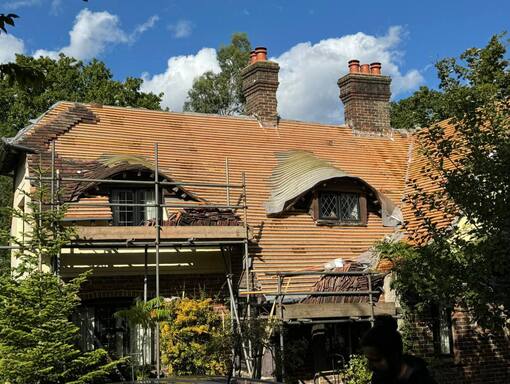
When a roof develops a problem, carrying out a repair promptly can help prevent further deterioration. However, the quality of that repair matters just as much as how quickly it is completed. A repair that only hides the visible symptom, uses an unsuitable method or fails to identify the underlying cause can leave the roof vulnerable to further problems.
What initially appears to be a repaired leak or replaced tile may therefore return later, sometimes after water has had more time to affect surrounding roofing materials.
For homeowners in Heacham, Norfolk, understanding the importance of properly completed roof repairs can help protect the wider roofing system. At Heacham Roofing Services, our approach is based on identifying the cause of a roofing defect before carrying out appropriate remedial work.
Why the Cause of the Problem Must Be Identified First
One of the biggest weaknesses of a poor roof repair is that it may concentrate solely on what can be seen.
A damp patch on a ceiling, for example, shows that moisture has entered the property, but it does not necessarily identify where the water entered the roof.
Rainwater can travel beneath tiles, along underlay or around structural components before appearing internally. Repairing the area immediately above the stain may therefore achieve very little if the true entry point is elsewhere.
Professional roof repair starts with diagnosis.
Poor Leak Repairs Can Allow Water Ingress to Continue
Water penetration is one of the main concerns associated with ineffective roofing work.
If the original opening remains unresolved, rainfall can continue entering beneath the roof covering even if the internal symptoms temporarily appear to improve.
Continued moisture exposure can potentially affect:
- Roofing underlay
- Battens
- Roof timbers
- Insulation
- Internal ceilings
- Surrounding roofing materials
The longer the problem continues, the greater the area that may eventually require attention.
Incorrectly Repaired Tiles Can Create New Weaknesses
A cracked, slipped or missing tile is often a relatively localised roofing problem.
When the surrounding roof remains sound, replacing or securing the affected tile correctly can restore effective protection.
Problems can arise when tiles are:
- Incorrectly positioned
- Poorly secured
- Damaged during repair work
- Replaced without checking surrounding tiles
- Installed without addressing defective support beneath them
Roof tiles work as an overlapping system. One poorly positioned tile can interfere with how rainwater moves down the roof and potentially expose the layers underneath.
Simply Repositioning a Slipped Tile May Not Be Enough
When a roof tile slips, the important question is why it moved.
The tile itself may be damaged, but the problem could also involve deteriorated fixings or supporting materials.
Putting the tile back into place without addressing the reason it slipped may only provide a temporary improvement. The same tile could move again, or neighbouring tiles affected by similar deterioration may begin slipping later.
A proper repair considers both the visible defect and the components responsible for keeping the roof covering secure.
Poor Flashing Repairs Can Cause Recurring Leaks
Lead flashing protects vulnerable areas where the roof meets other parts of the property.
These areas can include:
- Chimneys
- Roof-to-wall junctions
- Abutments
- Valleys
- Changes in roof level
If damaged flashing is simply covered or temporarily sealed without addressing its condition properly, water may eventually find another route beneath the repair.
Flashing must work with the surrounding roof covering to direct rainfall safely away from vulnerable junctions. Correct detailing is therefore essential.
Chimney Repairs Need to Consider the Surrounding Roof
Roof leaks around chimneys can be particularly difficult to diagnose because several different components meet within a relatively small area.
The problem might involve flashing, masonry, mortar joints or adjoining roof tiles.
Concentrating on only one component without assessing the complete chimney-to-roof junction can leave another weakness unresolved.
A thorough inspection helps establish exactly how water is entering before repair work begins.
Poor Repairs Can Hide Developing Deterioration
One of the problems with superficial repairs is that they can make a roof appear fixed without resolving what is happening underneath.
This can delay further investigation while deterioration continues out of sight.
For example, covering a damaged section may conceal signs of movement or moisture without correcting the underlying weakness.
A good repair should restore the affected roofing detail rather than simply make the visible damage less noticeable.
Temporary Repairs Can Become Long-Term Problems
There are situations where temporary measures may be used to protect a property until appropriate work can be completed.
The problem arises when a temporary solution is treated as though it were a permanent repair.
Roofing materials must cope with repeated exposure to rainfall, wind and temperature changes. A short-term measure may not be designed to withstand these conditions indefinitely.
Following temporary work with an appropriate permanent repair helps ensure the underlying defect is properly addressed.
Poor Repairs Can Affect Surrounding Roofing Materials
A roof functions as a complete system.
Tiles, underlay, battens, flashing, valleys, ridges and other components all contribute to keeping the property protected. Work carried out on one area can therefore influence adjoining sections.
For example, disturbing surrounding tiles unnecessarily or creating unsuitable junctions during a repair can introduce weaknesses that were not previously present.
Professional workmanship aims to repair the defective area while preserving sound roofing materials around it.
Repeated Repairs Can Signal That Something Has Been Missed
If the same roofing problem keeps returning, it deserves closer investigation.
Recurring leaks or repeated movement may indicate that previous work addressed the symptom rather than the cause.
Warning signs include:
- A leak returning after rainfall
- Damp reappearing in the same area
- Tiles repeatedly becoming displaced
- Flashing repairs continually requiring attention
- New deterioration appearing around previous repairs
At this stage, repeatedly carrying out similar work without reassessing the roof is unlikely to provide the best result.
A wider inspection can help determine whether there is another underlying problem.
Poor Drainage Can Be Overlooked During Repairs
Not every roofing problem originates from damaged tiles.
Rainwater needs to leave the roof efficiently. Blocked or defective drainage components can cause water to behave differently from how the roof was designed to manage it.
When investigating recurring problems, attention may also need to be given to:
- Guttering
- Valleys
- Roof outlets
- Roof edges
- Areas where water collects
Repairing a damaged section without considering why excessive water is reaching it can leave the original conditions unchanged.
Older Roofs Need Particularly Careful Assessment
An older roof may contain materials that have weathered at different rates.
One defective area may be suitable for a straightforward repair, while another may indicate more widespread deterioration.
This makes professional assessment especially valuable.
Before carrying out work, it is useful to understand whether the problem is genuinely isolated or part of a broader pattern involving multiple areas of the roof.
A good repair decision should be based on the overall condition rather than the age of the roof alone.
When Is a Localised Roof Repair Appropriate?
Not every roofing defect requires extensive work.
Targeted repairs can be highly effective when:
- Damage is confined to one area
- Surrounding materials remain sound
- The source of the problem can be clearly identified
- The underlying structure remains serviceable
- The repair can restore the original weather protection
In these circumstances, professional repair can preserve the existing roofing system and prevent a small defect from developing further.
The key is carrying out the right repair rather than simply doing the smallest amount of work possible.
When Might the Roof Need More Than Another Repair?
If a roof has experienced years of recurring problems, another isolated repair may not always be the most appropriate solution.
A broader assessment becomes increasingly important when there is:
- Widespread tile deterioration
- Water ingress in several locations
- Frequent new defects
- Extensive weathering
- Numerous previous repairs
- Deterioration across multiple roof details
Where the roofing system has become extensively worn, replacement may eventually provide a more dependable solution than continuing to repair individual sections.
Professional assessment can help distinguish between these situations.
Why Professional Roof Repairs Provide Greater Value
Effective roofing work is not simply about replacing visible damaged materials.
A professional repair process considers:
- What symptoms are present.
- Where the defect actually originates.
- Why the problem developed.
- Whether surrounding materials have been affected.
- Which repair method will restore effective protection.
This diagnostic approach is particularly important with leaks, where the point of water entry can be very different from where moisture eventually becomes visible.
Early, Proper Repairs Help Preserve the Existing Roof
When the majority of a roof remains in good condition, repairing local defects correctly can help extend its useful service life.
Prompt professional attention reduces unnecessary exposure to moisture and helps preserve surrounding roofing components that remain sound.
This is why small problems should not be ignored or repeatedly covered with short-term solutions. Dealing with them properly while they remain manageable can help prevent more extensive deterioration later.
Why Choose Heacham Roofing Services?
Heacham Roofing Services provides professional roofing services throughout Heacham, Norfolk, including roof inspections, leak repairs, tile repairs and new roof installations.
Our approach focuses on understanding why a roofing problem has occurred before deciding what work is required. Where deterioration remains localised, carefully completed repairs can restore dependable protection. Where inspection identifies wider problems, the condition of the complete roofing system can be considered before recommending the appropriate solution.
By concentrating on accurate diagnosis and professional workmanship, we aim to resolve roofing defects properly rather than simply concealing their symptoms.
Conclusion
Poor roof repairs can lead to bigger problems when they fail to address the actual cause of deterioration. An incorrectly positioned tile, inadequate flashing repair or poorly diagnosed leak may leave water continuing to enter the roofing system even though the problem initially appears to have been resolved.
Over time, this can expose surrounding materials to further deterioration and result in recurring roofing problems.
For homeowners in Heacham, Norfolk, Heacham Roofing Services provides professional roof repairs based on careful inspection and appropriate remedial work. If a roofing problem has appeared or an earlier repair keeps causing concern, our experienced team can assess the affected area and recommend the right solution to restore reliable protection.
Call us on: 01485 506 937
Click here to find out more about Heacham Roofing Services
Click here to complete our contact form and see how we can help with your roofing needs.